

BriteMinds™ Launches Screen Time Assessment to Help Families Navigate Raising Children in the AI Era

Agnes Regeczkey, PhD, founder and CEO of BriteMinds, with her mighty team, created the Screen Time Assessment to help families better understand and guide their children’s relationship with technology.
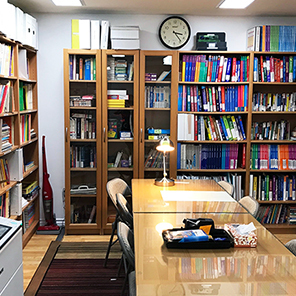
BriteMinds Learning Center promotes thoughtful learning and responsible technology use as children navigate an increasingly digital and AI-shaped world.

Families can use the BriteMinds Screen Time Assessment to build awareness of children’s digital habits and support healthy, intentional technology use.
New Screen Time Assessment helps parents understand their child’s relationship with technology and supports developing healthy and responsible digital habits.
The launch comes as governments around the world are setting new boundaries around children’s access to and use of social media and artificial intelligence, while technology companies are strengthening protections for younger users. But regulations and platform safeguards can only go so far. Their impact is strongest when those protections are reinforced by the culture, routines and technology habits within individual families.
That raises a more personal question that policy alone cannot answer: What is already happening in my child’s relationship with technology?
“BriteMinds honors the child’s mind as one of the most precious assets of the family and humanity,” said Agnes Regeczkey, PhD, a child, adolescent and adult psychoanalyst and founder and CEO of BriteMinds.
Technology now plays an increasingly prominent role in shaping children’s identity, attention, relationships and understanding of the world. BriteMinds emphasizes what it believes must remain at the center: “Raised by Humans.”
Dr. Regeczkey continued, “‘Raised by Humans’ is our reminder that no matter how intelligent technology becomes, children still need human guidance to make sense of the world around them. In the AI era, parents’ responsibility is even greater: beyond technical proficiency, children need ethical and moral judgment, critical thinking, self-awareness and human relational perspective. The more intelligent our technologies become, the more essential it is to understand and use our uniquely human capacities.”
The 30-question assessment looks beyond the number of hours a child spends on a device. It examines how technology functions in a child’s everyday life, including emotional regulation, self-control, sleep, relationships, school and family functioning, gaming, AI use, and the development of screen-time habits.
As AI becomes increasingly integrated into how children learn, relate to others, solve problems and make decisions, the challenge for families extends well beyond traditional ideas of “screen time.” The more important question is what kind of relationship children will develop with technology, and what guidance will shape that relationship.
For BriteMinds, Responsible AI Education means helping children develop objectivity, ask thoughtful questions and think critically, using AI to expand human thinking rather than replace it.
Beyond “How Many Hours?”
Children absorb not only the content technology offers, but also the technology habits modeled around them, making digital wellbeing a family and social responsibility, not a child-only issue. Screens support learning, communication, creativity, entertainment and AI use, but hours alone cannot show whether technology is helping a child thrive or beginning to interfere with development.
BriteMinds therefore asks a broader question: What is a child practicing—mentally, behaviorally and relationally—through screen time?
The assessment encourages parents to consider whether a child is finding technology difficult to stop; whether it is interfering with sleep or responsibilities; replacing face-to-face relationships or offline interests; becoming a primary method of coping with boredom, frustration or distress; or affecting motivation, attention, family routines and everyday functioning. It also helps parents recognize what is going well and encourages awareness before concerning patterns develop. As one parent reflected while completing the assessment:
“I was surprised by the impact of the questions. They made me think about subtle signs I had previously written off as, ‘Every kid does this.’ My child is still young and doesn’t have any major issues, but answering the questions helped me see more clearly what we might face in the future if I’m not paying attention, especially knowing his personality.”
That reflection captures a central purpose of the assessment: building awareness before problems emerge. Its questions help parents recognize developing patterns and look beyond screen hours alone, since frequent use can coexist with healthy functioning while moderate use may still signal concern.
What the BriteMinds Screen Time Assessment Examines
The assessment considers seven interconnected dimensions of a child’s digital life, looking broadly at behavioral control, emotional regulation, sleep and wellbeing, relationships, gaming and digital engagement, daily functioning, and the developing ability to use technology and AI responsibly.
The assessment takes approximately 15 minutes to complete and asks parents to reflect primarily on patterns they have observed in their child’s recent everyday life.
Parents receive a personalized, science-informed report that identifies strengths, emerging concerns and priority areas; places the child’s results within the proprietary BriteMinds Digital Wellbeing Continuum™; and provides practical resources and an individualized family action plan.
The BriteMinds Digital Wellbeing Continuum™
At the center of the personalized report is the BriteMinds Digital Wellbeing Continuum™, a proprietary eight-level framework created to help families understand a child’s current relationship with technology within a broader developmental context. Rather than reducing the child to a single score, the Continuum helps parents identify where strengths are already present, where patterns may be shifting, which areas deserve attention first and what actions may support healthy digital balance.
The report includes an individualized Digital Wellbeing Overview, understanding of assessment domains, prioritized areas for attention, practical family strategies, recommendations for the home digital environment and a personalized action plan.
The assessment is not a diagnostic or clinical tool, nor is it intended to judge, grade or label children. Because every child and family has a unique relationship with technology, the Screen Time Assessment is designed to help families recognize patterns early, celebrate strengths, understand vulnerabilities and create opportunities for meaningful change through parent-child collaboration.
The objective is to support a healthy, productive and intentional relationship with technology, grounded in ethical awareness, moral judgment and human responsibility. For many families, a screen-free childhood may no longer be a realistic expectation, making intentional guidance even more important.
The assessment grew from BriteMinds’ commitment to Responsible AI Education. It reflects an increasingly urgent challenge facing parents, educators, governments and technology companies alike: How do we help children benefit from powerful technologies while continuing to develop the distinctly human capacities they will need to use them wisely?
“That question became part of the inspiration for creating the BriteMinds Screen Time Assessment. Before we can guide a child toward healthy technology use, we need clear awareness of how technology is functioning in that child’s life. Is it supporting curiosity, learning, productivity and connection, or beginning to replace sleep, emotional regulation, independent thinking, relationships or real-world experiences?” said Agnes Regeczkey, PhD.
A Global Shift in How Childhood and Technology Are Being Addressed
The Screen Time Assessment launches amid a global shift in how governments are addressing children’s access to digital platforms and AI.
Australia’s social-media age restrictions have been in effect since Dec. 10, 2025, requiring age-restricted platforms to take reasonable steps to prevent Australians under 16 from creating or keeping accounts. The United Kingdom has announced a social-media ban for under-16s, with the first restrictions expected to take effect in spring 2027, alongside stronger age-assurance requirements and additional protections from high-risk online features. On Sept. 17, 2026, the European Commission proposed the EU KIDS Act, which includes age-based access rules and safety-by-design requirements for services used by minors, including social media, video-sharing platforms, online video games, AI companions and chatbots; the proposal must still pass through the EU legislative process. In California, where BriteMinds is based, Gov. Gavin Newsom signed legislation on Sept. 10 strengthening protections involving companion chatbots, children’s privacy and addictive social-media features for users under 16.
Technology companies are responding as well. Meta has expanded protections for teen accounts across Instagram, Facebook and Messenger, including age-appropriate content settings, age-assurance measures and expanded parental supervision tools.
Together, these developments point to a larger shift: society is increasingly recognizing that children cannot simply be treated as smaller adult users of technology. Yet BriteMinds believes external safeguards address only part of the challenge. Regulation can establish boundaries. Technology companies can build protections. But neither can tell a parent what is happening in the life of their individual child.
Growing public and news attention to these developments helped inform the development of the BriteMinds Screen Time Assessment.
From Policy to Practice: A California School Initiative
California’s recent policy developments are also creating new opportunities for schools to translate technology safeguards into everyday educational practice.
Under Assembly Bill 3216, the Phone-Free School Act, California school districts, charter schools and county offices of education were required to adopt policies limiting or prohibiting student smartphone use by July 1, 2026. In parallel, Senate Bill 1288 (2024) led to the California Department of Education’s Model Policy: Artificial Intelligence in Education, providing schools with a framework for developing local approaches to safe, responsible and human-centered AI use.
BriteMinds believes effective implementation goes beyond establishing rules. Policies are strengthened when they are supported by the culture, habits, relationships and expectations surrounding technology in a child’s everyday life, at school and at home.
Through its Responsible AI Education and Digital Wellbeing initiatives, BriteMinds is inviting California schools and districts, including Los Angeles-area school communities, to explore partnerships that help translate policy into practice by supporting healthier technology habits, critical thinking, responsible AI use and meaningful collaboration among students, educators and families.
A Broader Responsibility for Child-Serving Organizations
As these policy and educational shifts make clear, digital wellbeing is increasingly a shared responsibility. BriteMinds invites schools, educational programs, family-serving organizations and companies that meaningfully engage with children to explore partnerships that strengthen responsible technology use, AI literacy and collaboration with families.
The goal is to move from awareness to shared action—helping more families understand and support how children learn, connect and develop in an increasingly digital world.
Parents can learn more and access the assessment at www.BriteMindsFamily.com
About BriteMinds Learning Center
BriteMinds Learning Center is an educational center based in Rolling Hills Estates, California, serving children and families through individualized learning, tutoring, executive-function coaching, parent support and educational consultation.
Founded 36 years ago, BriteMinds is guided by a process-oriented teaching philosophy that combines traditional educational values with approaches informed by neuroscience, child development and responsible technology use.
Through its Responsible AI Education initiative, BriteMinds is extending this philosophy to one of the defining developmental challenges facing families today: helping children build the judgment, self-awareness, critical-thinking skills and human relationships they need to thrive in an increasingly digital and AI-shaped world.
At the heart of this philosophy is BriteMinds’ belief that a child’s mind is one of the most precious assets of both the family and humanity, and that it must be protected, nurtured and thoughtfully cultivated throughout childhood.
Media Contact
BriteMinds Learning Center™
810 Bart Earle Way, Suite D
Rolling Hills Estates, CA 90274
Web: www.BriteMinds.com
Screen Time Assessment: www.BriteMindsFamily.com
Agnes Regeczkey PhD, BriteMinds Founder/CEO
BriteMinds Learning Center
+1 310-541-2005
email us here
Legal Disclaimer:
EIN Presswire provides this news content "as is" without warranty of any kind. We do not accept any responsibility or liability for the accuracy, content, images, videos, licenses, completeness, legality, or reliability of the information contained in this article. If you have any complaints or copyright issues related to this article, kindly contact the author above.
